The University of Washington is managing 21 LEED® projects at the moment, but few UW facilities are more interdisciplinary than 90-year-old Savery Hall. Therefore, it was only appropriate that a mixed-mode strategy including VRF and natural ventilation should combine the new and the old to deliver a lesson in performance.
The University of Washington is managing 21 LEED® projects at the moment, but few UW facilities are more interdisciplinary than 90-year-old Savery Hall. Therefore, it was only appropriate that a mixed-mode strategy including VRF and natural ventilation should combine the new and the old to deliver a lesson in performance. The University of Washington (UW) is primarily located on three campuses in Seattle, Tacoma, and Bothell, WA, with research and educational facilities throughout the world.
In 2004, the UW established a plan titled, “Restoring The Core,” to renew and renovate 15 significant buildings on the Seattle campus. The plan identified the deteriorating conditions of these buildings - which total more than 900,000 gross sq ft and house more than 40 academic programs - as a threat to UW’s ability to deliver core campus functions in teaching, research, and public service. The goals were to overcome the threat, and to protect and sustain the university’s mission. Savery Hall, a “Restore The Core” building combines a traditionally historical ventilation system with newer sustainable heating and cooling technology.
The Savery Hall renovation received funding from the Washington State Legislature provided that it achieves at least a LEED®-NC Silver rating through the USGBC. In addition to sustainable considerations, seismic and ADA upgrades were also identified in the plan for this project. Upon completion, the operating data for electricity, gas, water, and steam consumption will be reported to the state through 2016, which creates transparency in design, construction, and operation results.
UW is managing this renovation through its Capital Projects Office (CPO), whose management plan is a collaborative process that includes a building committee; input from the departments of engineering, facilities, and environmental safety; and an internal approval process through the Architectural Commission and the Board of Regents. The CPO works through an integrated design process on each project and hires the required architects and consultants, a commissioning authority, and a contractor through a GC/CM process. The CPO constantly seeks innovative ways to guide design teams through the UW process and to streamline efficiencies that will pay off during building operation.

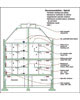
An artist’s rendering of the second floor mezzanine offices. Image courtesy of SRG Partnership, Inc.
Keeping in line with the UW’s sustainability goals, Savery Hall is one of 21 LEED projects in progress. A top priority for each of these projects is lowering the cost of operation through the reduction of energy usage. To that end, Savery Hall, is a LEED-NC v2.1 major renovation. In order to achieve the LEED-NC Silver objective, a primary goal was to design a building heating/cooling system that could augment a naturally ventilated building. A variable refrigerant flow (VRF) system was selected to meet this goal.
Savery Hall
Savery Hall was designed by Bebb & Gould in the Collegiate Gothic style and built in two phases, in 1917 and 1920. It houses the College of Arts and Sciences’ Department of Economics, Department of Philosophy, and Department of Sociology. Savery Hall also provides space for the Center of Social Science Computation and Research (CSSCR), a computer resource center that provides facilities and support for all the social sciences. The building serves as a major instructional facility, with over 25% of the assignable area in classroom use. UW has committed to preserving this historically significant building and extending its useful life. A collective effort involving UW Capital Projects, design professionals, occupants, and contractors was required. SRG Partnership of Seattle was selected to direct the team and provide architectural renovations.1Mechanical, electrical, and plumbing systems in the building were operating well; however they had exceeded their service life, did not satisfy current demand or current codes, and were inefficient. The 85-year-old building was in need of complete renovation.
In an effort to continue the sustainable and energy-saving goals of the university and to meet state-mandated requirements, the team originally set out to meet LEED-NC Silver rating requirements. The team has exceeded this goal and is on track for a LEED-NC Gold Certification. To improve its performance and energy efficiency, the project replaced all major building systems, including mechanical and electrical systems. It also replaces the telecommunications and interior finish systems to meet modern classroom and academic program needs.
During the pre-design and schematic design phases, to comply with the university’s design criteria and to reduce energy consumption, a traditional variable air volume (VAV) system (without mechanical cooling) was proposed. To improve the building’s sustainability and further reduce energy consumption, a natural ventilation system was investigated and modeled. This modeling led the team to a VRF system and finally a mixed mode natural ventilation and VRF system.
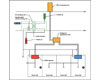
FIGURE 1. Overview of the proposed VRF and heat recovery ventilation system.
PRE-DESIGN, SCHEMATIC design, and UW CRITERIA
Over the past several years, UW developed a “Facility Design Guide” which provides continuity and consistency to the mechanical systems it builds and maintains. As a general practice, mechanical cooling is not provided in general-use buildings, except for libraries and large auditoriums. For buildings without mechanical cooling, outdoor air is used for free cooling, and the amount of outdoor air provided is that which will limit the indoor temperature rise to 7°. The outdoor summer design temperature for Seattle is 82°F, consequently, on a summer design day, the heating and ventilating system (HV) should maintain conditioned spaces at or below 89°.Building heat gains are typically generated by people, lights, equipment, and solar gain through the windows. These loads are computed and used to calculate a summer design day supply air quantity. Since this amount of supply air is only required when climatic conditions are at or exceed a summer design day, a traditional VAV system was proposed at the pre-design phase to reduce fan energy and heating energy. This proposal was further developed during the schematic design phase. In practice, to the benefit of the occupants, most general buildings following this design approach do not exceed 80° to 85°, because the actual heat gains are usually less than peak design values.
UW is dedicated to implementing sustainable design practices, reducing energy use, and reducing its carbon footprint. After reviewing the Savery Hall project, UW’s design team decided to break from tradition and investigate more efficient, more sustainable HVAC systems. At the outset of the design development phase, the design team was asked to analyze a natural ventilation approach for Savery Hall based upon several similar operating facilities. Vision Engineering, located in Vancouver, British Columbia, Canada, was selected to model a natural ventilation approach because of its experience and efforts in working with the university on other similar projects.
Natural Ventilation
Natural ventilation is the use of a building’s shape and orientation, coupled with wind and warm air buoyancy, to induce airflow through a building. This natural airflow ventilates and cools the building. Air is typically introduced at the windows and exits the building at a high point.Using the following design and operating parameters, the natural ventilation approach was modeled to determine its ability to ventilate and cool Savery Hall:
Trickle vents. Located under every window that opens into an occupied space with vent length matching the existing window width (approximately 40 in. wide by 8.6 in. high). Each vent had 40% free area, which provided 50 cfm per vent, satisfying the minimum ventilation requirements.
Three wind towers. Each wind tower was equipped with an exhaust fan, which was to be activated in response to CO2sensors.
Classroom occupancy/lighting/equipment schedules. The occupancy (50 people/sq ft) varied from 0% to 90% depending upon time of day. The lighting (0.8 W/sq ft) varied from 5% to 90% and the equipment (2 W/sq ft) varied from 5% to 90%.
Office occupancy/lighting/equipment schedules. The occupancy (7 people/sq ft) varied from 0% to 90% depending upon time of day. The lighting (0.8 W/sq ft) varied from 5% to 90%, and the equipment (1 W/sq ft) varied from 5% to 90%.
Glazing. Double, low E, Solarban 80 with aluminum frame (U= 0.329, SC = 0.43).
The following design and operating parameters could not be fully modeled, but were factored into the conclusions:
- A night purge routine using wind tower fans.
- Turning lights off during the hottest part of the day.
- DDC routines which allow cooling to concentrate on the hottest rooms.
- Occupant diversity.
- Manually operated windows.
- Internal mass of objects within the building (desks, chairs, books, etc).2
VRF
After the completion of the natural ventilation analysis, it was evident that the building could not be adequately cooled utilizing natural ventilation. An alternative cooling system had to be selected. A VRF system was chosen for this building because of its high efficiencies, system flexibility, and minimal space requirements, which worked well in preserving the historic nature of the building.
FIGURE 2. An energy use comparison between VAV vs. VRF. The VRF system reduced energy consumption by 27.5%.
At Savery Hall, floor-standing indoor VRF units were used to serve the mezzanine office spaces, which did not have enough ceiling space to house concealed ceiling units. Due to these space constraints, natural ventilation was used to ventilate the mezzanine offices. All other office spaces, as well as the conference rooms and classrooms, utilized ceiling concealed units, which are dependent upon more traditional distribution systems. Each of the ceiling-concealed VRF units were provided with direct-ducted outside air. This air was supplied by a 100% outside air, central AHU with heat recovery capabilities and was sized for economizer capacity.
Seattle Energy Code
The 2006 Seattle Energy Code allows an HVAC system to be installed without economizers if the equipment’s efficiencies are at least 15% higher than the minimum values listed in the Code’s tables of minimum efficiency requirements. These values are based upon the American Refrigeration Institute (ARI) standard for equipment testing. Unfortunately, VRF equipment did not have an applicable ARI Standard at the time the permit was submitted for this project. Since the very nature of VRF systems make them less efficient with the use of economizers because of the inability to transfer energy between zones, an alternate method had to be employed in order to receive an economizer exception.
FIGURE 3. The final mixed mode solution: Ceiling-mounted VRF units in classrooms and offices. Floor-mounted VRF units are in the mezzanine offices.
This analysis showed that the use of the proposed VRF system without an economizer would result in a 27.5% energy savings compared to the baseline code minimum VAV system (Figure 2). This energy savings allowed the project to qualify for the energy code economizer exemption and helped the project realize substantial first-cost savings by reducing the size of the central air handler to a capacity consistent with minimum outside air requirements. Additional energy savings were accomplished by reducing the size of all ductwork and simplifying the control system.
Mixed-Mode Solution
In addition to the first-cost savings from the economizer exemption, the design team realized that additional energy savings could be achieved by also including some of the earlier project natural ventilation strategies. The final HVAC system design for Savery Hall ended up using a mixed-mode approach, employing both VRF and natural ventilation (Figure 3).The VRF system is installed throughout the building, and all perimeter spaces are equipped with operable windows. There are three wind towers located in the building to allow for the natural ventilation process. Each of the wind towers has an associated exhaust fan that allows for fan assist of the natural ventilation system if any of the centrally located CO2sensors alarm. When outdoor conditions are optimal for natural ventilation and the indoor space temperature is within an acceptable range (68° to 82°), the indoor VRF units serving the perimeter spaces are turned off by the building’s EMS. In conjunction with the unit turning off, a green light is turned on in the occupant’s space, signaling them that they should use their operable window in order to control their thermal comfort.
During these optimal conditions, the indoor VRF units are switched into a fan-only mode to allow for mechanical ventilation but to prohibit any heating or cooling in the space. When indoor space conditions are no longer within an acceptable range, the VRF unit is turned back on by the EMS, and a red light is turned on in the space to alert the occupant that the VRF system is on signaling that the windows should be closed to conserve energy.
Training the occupants on the system and informing them of how their actions affect the overall energy use of the building is a key with this integrated system type. UW is employing several technologies in order to keep their occupants informed of the building’s status and their ongoing role in its success.ES
Works Cited
1. Background and historical information provided by the project architect, SRG Partnership, Inc. Special thanks to the following: Rick Zieve, FAIA, design principal; Gary Harris, AIA, project manager; and Aaron Pleskac, AIA, project architect.2. Design Development Stage Natural Ventilation Modeling Results for the University of Washington at Seattle, Washington, Prepared by Vision Engineering: Albert Bicol, P.E. LEED® AP, partner.
3. Seattle Energy Code RS-29b